Drop an audio or video file here, or select one from a device.
Common audio and video formats acceptedRead the conversation, return to the exact moment, and reuse spoken Estonian in the format the work requires
Keep familiar spelling visible in the draft, including õ, ä, ö, ü, place names, organisations, and recurring names that can be checked in the editor.
Use timestamps to move from a sentence back to its audio. It is faster to confirm a quote, correct an unclear word, or locate a decision in a long meeting.
Turn a reviewed transcript into practical outputs for documents, captions, archives, and media workflows, including text files and subtitle formats.
Create an English version for an international reader while retaining the Estonian source text for review of terminology, names, and context.
| SpeechText.AI | Google Cloud | Amazon Transcribe | Microsoft Azure | OpenAI Whisper | Vosk Estonian | TalTech WebTrans | |
|---|---|---|---|---|---|---|---|
| Accuracy (Estonian) | 11.4% WER (STAI-ET100, internal estimate) | 15.8% WER (STAI-ET100, estimate) | 18.7% WER (STAI-ET100, estimate) | 16.4% WER (STAI-ET100, estimate) | 14.9% WER (STAI-ET100, estimate; large-v3 baseline) | 23.6% WER (STAI-ET100, estimate; public model) | 19.2% WER (STAI-ET100, placeholder; research demo) |
| Supported formats | MP3, WAV, M4A, MP4, WEBM and more | FLAC, WAV, MP3, OGG, WEBM | FLAC, M4A, MP3, MP4, OGG, WAV, WEBM | WAV, MP3, OGG/Opus, SDK streams | MP3, MP4, M4A, WAV, WEBM | PCM WAV; convert first | WAV; service options vary |
| Domain Models | Workflow models for legal, medical, research and more | Phrase sets and audio models | Custom vocabulary; availability varies | Phrase lists; Custom Speech varies | No dedicated Estonian domains | General public model | General research model |
| Speech Translation | Estonian to English text and subtitles | Via Cloud Translation API | Via Amazon Translate | Via Translator API | English translation task | No | No |
| Free Technical Support | Yes, email support | Documentation/community; paid plans | Documentation/community; paid plans | Documentation/community; paid plans | Community only | Community only | Research contact |
A simple path from spoken recording to an editable Estonian document
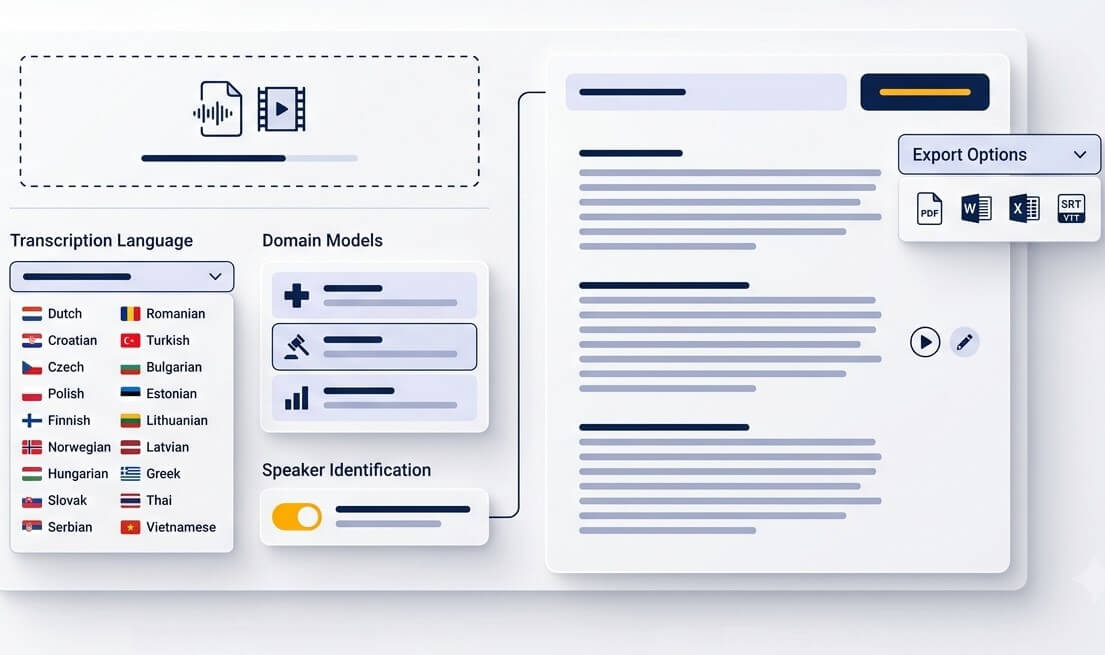
Upload an audio or video file from a phone, meeting platform, camera, or archive. MP3, WAV, M4A, OGG, OPUS, WEBM, MP4, and other common formats can be prepared for transcription.
Choose Estonian, then add names, acronyms, or specialist terms when they matter. Clear speaker audio, the correct language setting, and a short terminology list can improve the first draft.
Open the time-coded transcript, listen to any uncertain passage, and export text or subtitle files. For formal, legal, medical, or published material, a human review remains an important final step.
Make spoken notes, classes, stories, and video easier to revisit without listening from the beginning
Convert M4A or OGG messages into readable notes. Oral-history interviews can become searchable drafts that are easier to label, share, and preserve.
Use a transcript as a study companion for Estonian-language lectures. Search for a concept, check the related timestamp, and build notes from the relevant section.
Estonian video transcription services give editors a workable script before captions are polished. Export timed subtitle files for courses, interviews, social video, and documentaries.
Keep attention on the speaker rather than the keyboard. A timestamped transcript makes it easier to identify quotations, themes, and passages that deserve a closer listen.
Prepare an English reading version for partners or collaborators while keeping the original Estonian transcript alongside it for context and terminology checks.
Turn recorded calls into a record of discussion points, questions, and agreed actions. Speaker labels and timestamps help participants return to the relevant exchange.
A searchable transcript supports careful review, clearer handovers, and accessible content
Create a navigable draft from hearings, committee sessions, consultations, and recorded statements. Verify wording against the source audio before relying on a transcript as a formal record.
Move from recorded interviews to searchable qualitative material. Add participant codes, review sensitive passages, and use timestamps when preparing findings or quotations.
Build an Estonian transcript before editing a programme, article, clip, or campaign. The same source can support captions, archive metadata, English drafts, and fact checking.
Designed around the practical work of turning speech into text that people can inspect, correct, and put to use
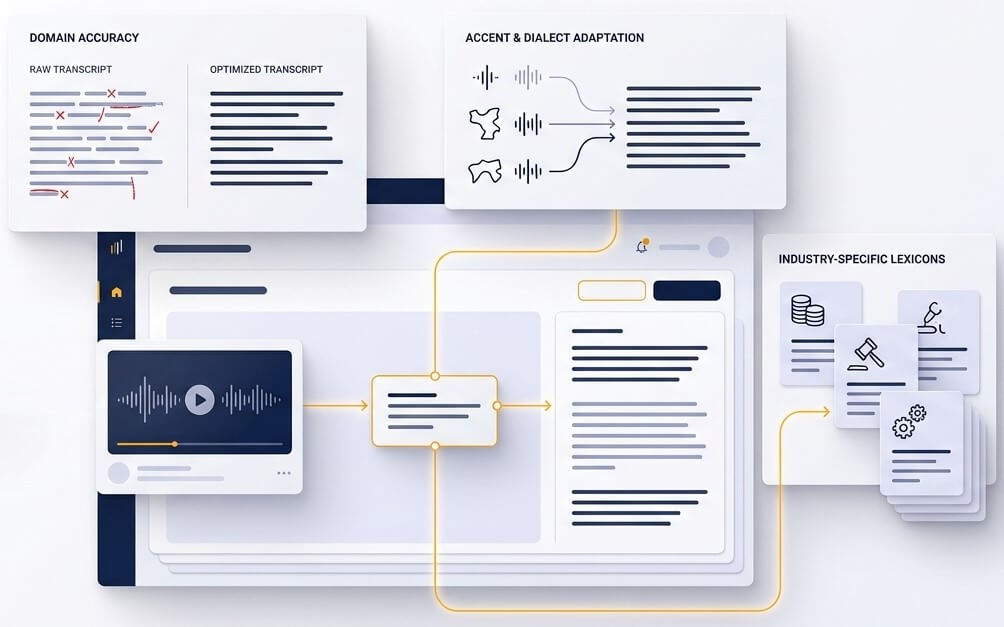
Estonian transcription needs more than a rough phonetic guess. Vowel letters such as õ, ä, ö, and ü, rich case endings, compound words, and local names all affect whether a transcript is readable. SpeechText.AI uses sentence context and recording context to produce a practical first draft, then leaves every passage available for direct review.
A useful record should be easy to validate. Time markers and speaker-aware sections help locate the source behind a statement instead of treating generated text as unquestionable. This is especially helpful when speech is fast, two people overlap, a surname is unfamiliar, or a recording includes Estonian mixed with English, Finnish, or Russian.
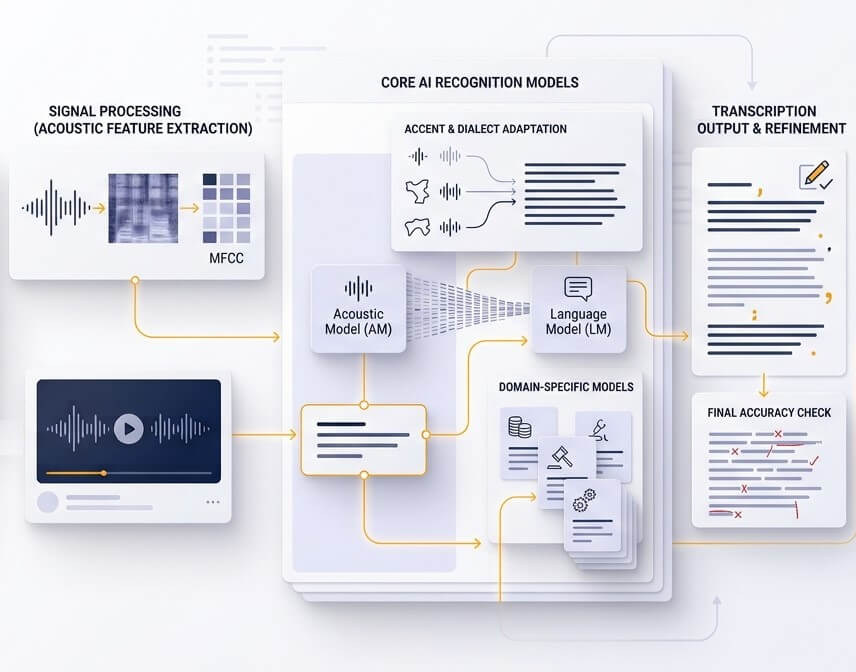
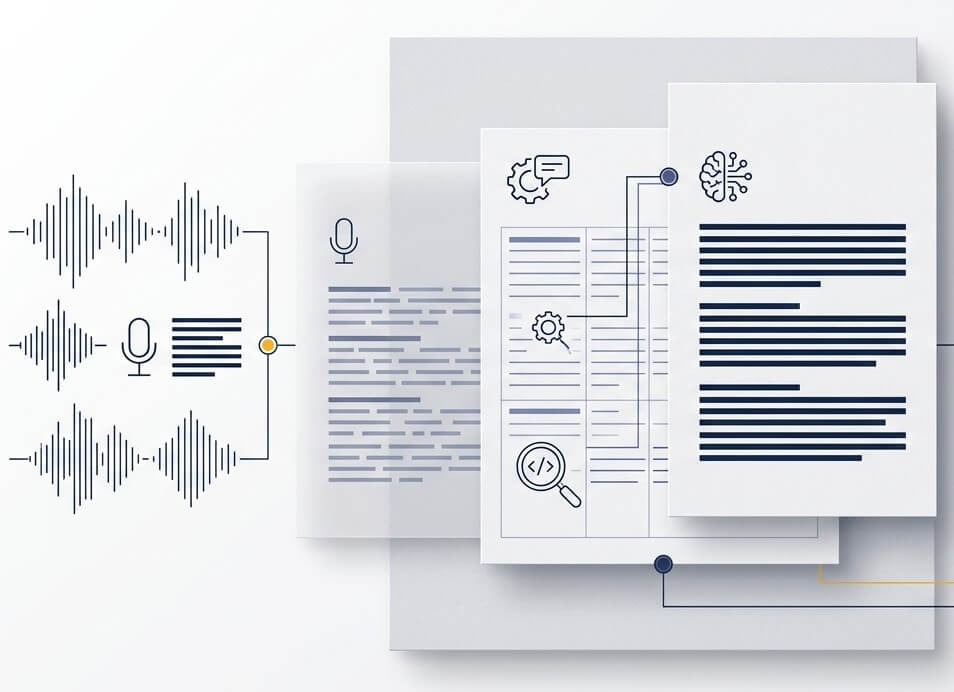
When a project needs to transcribe Estonian to English, the Estonian transcript remains the reference point. That makes it easier to check names, technical language, figures of speech, and quotations before an English version is shared. Automated translation is useful for speed, but certified or high-stakes translations should be reviewed by a qualified linguist.
No transcription system has one fixed accuracy rate. Estonian word error rate changes with microphone quality, background sound, speaker overlap, regional pronunciation, speed, and unfamiliar terminology. The comparison table uses a clearly labelled internal estimate rather than unsupported vendor claims. Testing a representative short recording is the best way to judge output for a specific workflow. Formal, clinical, legal, and published material should always be reviewed against the source recording.
Yes. Start with an Estonian source transcript and select English output when an English reading version or subtitle draft is needed. Keeping both versions helps reviewers check proper nouns, specialist terms, quotations, and details that may need a human translator's judgement.
File transfers use encrypted connections, and account controls make it possible to manage uploaded material and transcript access. Sensitive recordings should be handled according to an organisation's own privacy, retention, consent, and data-processing requirements. Review the applicable platform privacy terms before uploading regulated or confidential material.
New users can use available trial access to test a typical Estonian audio or video clip before choosing a plan. A useful test includes the real recording conditions: the same speakers, recording device, noise level, and terminology expected in ongoing work.
The service accepts common recording formats, including MP3, WAV, M4A, OGG, OPUS, WEBM, and MP4. Audio can usually be extracted from video during processing. For the clearest result, upload the original recording where possible instead of a heavily compressed forwarded copy.
Yes. Estonian automated transcription software works best when important names, company terms, and acronyms are supplied or checked during editing. Dialects, informal speech, simultaneous speakers, and switches into another language may need more review. Time-coded playback makes those checks quicker than searching through a recording manually.