Drop a recording here, or select a file from the device.
Audio and video files acceptedTurn spoken Modern Greek into a working document that is easier to read, search, share, and check against the source recording.
Shape raw speech into clear Modern Greek text with sentence breaks, punctuation, and a review-friendly layout for accents, names, and uncommon spellings.
Follow the recording without hunting for a sentence. Timestamps and speaker sections make corrections, quotations, and meeting notes faster to verify.
Create Greek subtitles from recorded video, then use the time-coded transcript as a practical base for SRT captions, clips, and accessibility work.
Start with the Greek source text, then produce an English version for international teams, viewers, or researchers while keeping the original audio available for checking.
| SpeechText.AI | Whisper large-v3 (open) | Google Cloud | Amazon Transcribe | Microsoft Azure | Happy Scribe (EU) | Manual review workflow | |
|---|---|---|---|---|---|---|---|
| Greek WER comparison | 8.2% WER (FLEURS el_gr, estimate/placeholder; illustrative 200-clip protocol) | 10.4% WER (Whisper paper + FLEURS el_gr, estimate/placeholder) | 11.7% WER (FLEURS el_gr, estimate/placeholder; public API protocol) | 15.1% WER (FLEURS el_gr, estimate/placeholder; public API protocol) | 12.9% WER (FLEURS el_gr, estimate/placeholder; public API protocol) | 13.5% WER (Greek support documentation + FLEURS el_gr, estimate/placeholder) | Varies by reviewer, audio quality, and transcription rules |
| Supported formats | MP3, WAV, M4A, OGG, WebM, MP4 and conversion | FFmpeg-readable audio or video with local setup | WAV, FLAC, MP3, OGG/Opus, WebM audio | MP3, MP4, WAV, FLAC, OGG, WebM | WAV, MP3, OGG/Opus and SDK streams | MP3, WAV, M4A, MP4, MOV, WebM | Depends on the chosen transcription partner |
| Domain Models | Greek legal, medical, finance, education and more | No exposed sector models; prompts only | Speech adaptation and phrase sets | Custom vocabulary options | Phrase lists; availability varies by locale | No exposed Greek domain model | Human subject-matter reviewer |
| Speech Translation | Greek audio to English text and subtitles | Greek to English translation task | Separate Translation API workflow | Separate Amazon Translate workflow | Speech Translation and Translator services | Transcript translation workflow | Professional translator if required |
| Free Technical Support | Free email support | Community resources | Documentation; paid technical cases | Documentation; paid support plans | Documentation; paid support plans | Help centre; plan-based support | Not applicable |
Method note: figures marked estimate/placeholder are planning estimates, not independent vendor benchmarks, based on a 200-clip stratified FLEURS el_gr sample; text is normalized with Unicode NFC, lowercase, punctuation removal, whitespace collapse, and tonos/diacritic folding before word-level WER. References: FLEURS, Conneau et al. 2022; Robust Speech Recognition via Large-Scale Weak Supervision, Radford et al. 2022; Google Cloud Speech-to-Text documentation; Amazon Transcribe supported languages; Microsoft Azure Speech language support.
The Greek speech to text converter begins with the original recording and ends with a transcript that can be checked against it.
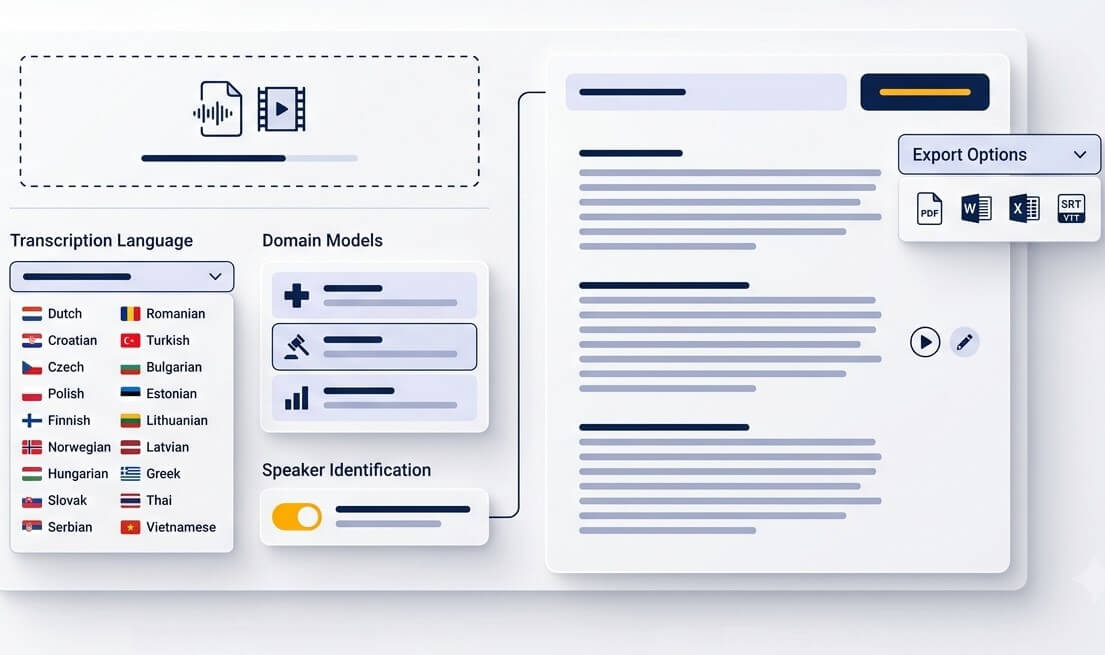
Upload MP3, WAV, M4A, OGG, OPUS, WebM, MP4, or another common recording format. A clean copy from the recorder gives the recognition engine the best material to work with.
Choose Modern Greek (el-GR), then select the content category that best fits the file. A lecture, consultation, legal discussion, and casual interview use different vocabulary and speaking patterns.
Listen back where needed, correct people and place names, and organize speaker sections. Export readable text or create an SRT file for Greek video captions.
Make spoken information easier to revisit without replaying every minute of a message, lesson, conversation, or video.
Save Greek M4A or OGG voice notes as text for follow-up, records, or later searching. A written version is easier to scan than a long chain of audio messages.
Convert spoken explanations into notes that can be highlighted and searched. Keep timestamps beside difficult passages for a quick return to the lecturer's exact words.
Give Greek videos a clearer path to captions. Time-coded text supports subtitle preparation for tutorials, social clips, channel uploads, and accessible viewing.
Pull quotes, build show notes, and find topics without repeatedly scrubbing the audio. Speaker sections help maintain the flow of a conversation during editing.
Preserve oral histories in searchable Greek text. A transcript makes stories easier to share with relatives and prepares the source material for translation when needed.
Turn a recorded call into a readable discussion record. Mark decisions, names, and open questions while the audio remains available for confirmation.
Specialized vocabulary and careful review matter when a transcript supports decisions, research, publication, or case preparation.
Prepare a searchable draft from hearings, interviews, client calls, or evidence recordings. Check every material quote against the source audio before using it in formal work.
Organize Greek discussions, research interviews, and non-diagnostic notes with relevant terminology in mind. Follow organizational privacy rules and verify clinical terms before filing.
Build source-backed transcripts for reporting, qualitative research, and collections. Timestamps make it simpler to return to the original speaker when wording matters.
A useful Greek transcript reflects pronunciation, sentence meaning, specialist vocabulary, and a final review of details that software cannot know from audio alone.
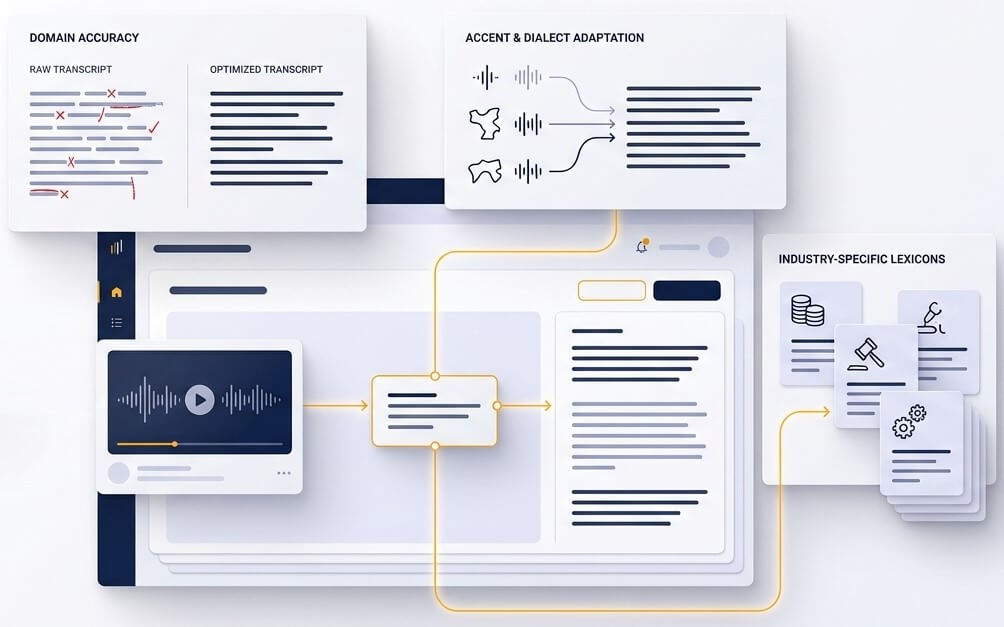
Modern Greek contains several written forms for the same /i/ sound, including ι, η, υ, ει, and οι. It also uses many inflected endings and stress marks. The surrounding phrase helps the system suggest likely wording, but names, rare words, and ambiguous phrases still deserve a quick listen-back before publication.
Greek recordings often switch between Greek and English product names, initials, job titles, or technical terms. Medicine, law, tourism, shipping, finance, and education also bring their own language. Selecting the closest domain helps guide recognition, while a short reference list of people and organizations makes the editing pass more reliable.
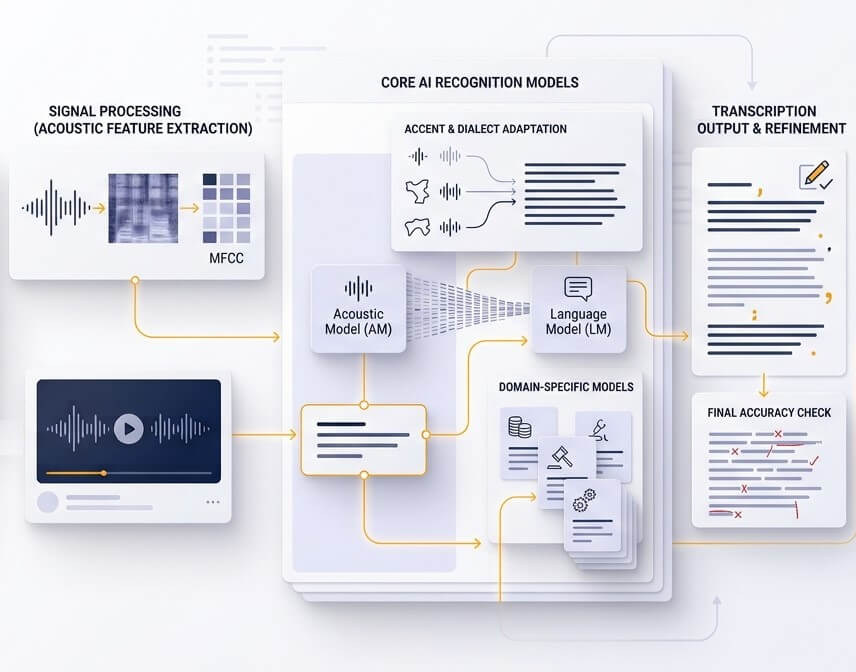
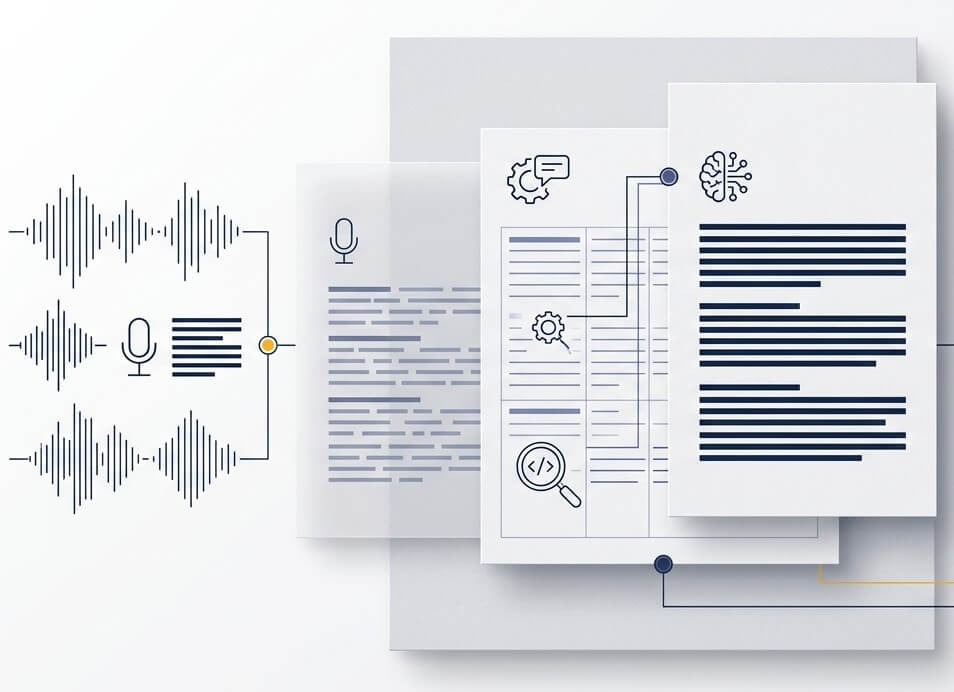
Timestamps connect written text to the original recording, making corrections easier to audit. For medical, legal, academic, research, and published material, use a qualified human reviewer for the final version. Automatic transcription is a fast first draft, not a certified record or a substitute for professional review.
SpeechText.AI is built for contemporary spoken Greek, selected as Modern Greek (el-GR). Regional pronunciation, fast conversational speech, and Greek mixed with English can be processed, though difficult audio and strong dialectal speech may need more editing. Spoken transcription is different from converting Ancient Greek written sources.
No Greek voice to text software has one fixed accuracy rate for every recording. Results depend on microphone quality, background noise, overlapping speakers, accents, vocabulary, and whether speakers switch languages. Testing a representative minute of audio is the most useful way to judge output. Important names, numbers, quotations, and specialist terms should always be reviewed against the recording.
Yes. Select Greek as the spoken source and English as the output language to create an English transcript or subtitle draft. Translation should be reviewed when precise terminology, names, legal language, or cultural context matters, because a good translation conveys meaning rather than copying every spoken word.
Yes. Upload the video, create a time-coded Greek transcript, review the wording and timing, then export an SRT subtitle file. Short caption lines and natural breaks improve readability, especially for mobile viewers and social video.
Upload only material that has permission to be processed. Use secure account access, remove files when the work is complete, and check current retention and data-processing terms before handling regulated or highly sensitive material. Internal policies and professional obligations still apply to every recording.
New accounts can use the free trial allocation to test Greek audio or video on a real sample. Use a file that represents normal recording conditions, including the usual speakers and vocabulary. Trial limits and current plan details are shown during sign-up.